
Is Mediation Required in Osceola County Divorce Cases?
If you’re asking whether mediation is required in Osceola County divorce cases, the short answer is yes. Almost every divorce filed here must go through mediation before a judge will schedule a final hearing. This isn’t a suggestion. It’s a court requirement under Florida law.
Florida Family Law Rule of Procedure 12.740 gives courts the power to order mediation in all family cases. The Ninth Judicial Circuit, which covers both Osceola and Orange Counties, applies this rule consistently. Unless a judge grants a specific exemption, mediation happens before your case moves forward.
How the Requirement Works in Practice
Here’s what actually happens. After you file your divorce petition at the Osceola County Courthouse in Kissimmee, the court issues a case management order. Any St. Cloud Divorce Attorney clients work with will tell you that order almost always includes a mediation deadline — one you and your spouse must meet before the court will move forward.
The mediator is a neutral third party. They don’t decide anything for you. Their job is to help both sides talk through disagreements about parenting plans, property division, and support. We see many couples walk into mediation feeling stuck, then walk out with a full agreement they both feel good about.
But mediation isn’t therapy. It’s a structured negotiation with a trained professional guiding the conversation. Most sessions in Kissimmee run between two and four hours, some cases need a second session to wrap up loose ends.
What Happens If You Skip It
You can’t ignore this. If you refuse to attend or fail to schedule mediation on time, the court can impose sanctions. That might mean paying your spouse’s attorney fees or having your case delayed. Judges at the Osceola County courthouse take this seriously.
We’ve seen people skip mediation thinking they’ll just handle it in court. Costly mistake. Going straight to trial without mediation means longer timelines, higher legal bills, and more stress for everyone involved, including your kids.
Are There Any Exceptions?
Yes. A few situations can exempt you from the mediation requirement:
- Documented domestic violence between the parties
- A history of threats or intimidation that would make mediation unsafe
- Cases where one party has a mental health condition that prevents meaningful participation
- Situations where both parties have already reached a full written agreement on all issues
If domestic violence is a factor, your attorney can file a motion asking the court to waive mediation. The judge reviews the evidence and decides. Safety comes first.
And if you’ve already worked out every detail with your spouse, you might not need a formal mediation session. But you’ll still need to present that agreement to the court in the proper format. Most people don’t realize this until they’re already deep into the process.
Why the Court Requires It
The goal is simple. Mediation saves time, reduces conflict, and gives families more control over the outcome. A study by the Florida Dispute Resolution Center found that over 70 percent of family mediation cases reach a full or partial agreement. That’s a real success rate.
Think about it this way. Would you rather spend months fighting in a courtroom, or spend a few hours in a conference room working toward a solution you helped shape? For most families in Kissimmee, mediation leads to better results and less emotional damage.
Mediation is required. But it’s also one of the most useful tools available to you during a divorce.
How the Florida Divorce Mediation Process Works Step by Step
Most people walk into mediation feeling nervous. That’s normal. But once you understand the steps, the whole thing feels a lot less overwhelming. We see this all the time with clients in Kissimmee, they come in anxious and leave saying “that wasn’t as bad as I thought.”
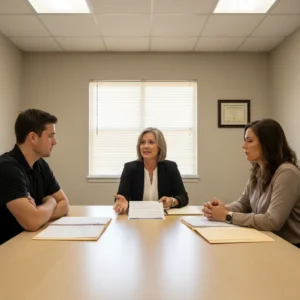 Here’s how the Florida divorce mediation process typically unfolds from start to finish:
- The court issues a mediation order. After your divorce petition is filed in Osceola County, the judge will usually order mediation before setting a trial date. You’ll get a deadline to complete it.
- Both sides pick a mediator. You and your spouse can agree on a certified mediator together. If you can’t agree, the court picks one for you. The mediator must be certified by the Florida Supreme Court.
- You prepare your documents. Before the session, you’ll gather financial records, bank statements, pay stubs, mortgage info, retirement accounts. Your attorney helps you organize everything so nothing gets missed.
- The mediation session happens. Sessions usually last between two and six hours. Sometimes longer for complex cases. Both spouses attend with their attorneys. The mediator opens with ground rules, then each side shares their perspective.
- Private caucuses begin. This is where the real work happens. The mediator meets with each side separately in different rooms. They go back and forth, carrying offers and concerns between the two parties.
- You negotiate the issues. Child custody, property division, support payments. Everything gets discussed one topic at a time. The mediator helps you find middle ground without forcing any decisions.
- An agreement is drafted or an impasse is declared. If you reach a deal, the mediator writes up a settlement agreement right there. Both sides sign it. If no deal is reached, the mediator files an impasse report with the court.
That signed agreement becomes binding. The judge reviews it and usually approves it as part of your final divorce judgment.
What Happens During Private Caucuses
The caucus part surprises most people. You don’t have to sit across a table from your spouse the whole time. In many Kissimmee mediation sessions, the spouses never even see each other after the opening statements.
The mediator moves between rooms. They share what each side is willing to do, and they keep things calm when emotions run high.
Here’s something worth knowing. The mediator can’t tell the other side anything you share in confidence during your caucus. That’s protected. So you can be honest about your priorities without worrying it’ll be used against you.
How Long Does a Mediation Session Take
It depends on your case. A couple with no kids and few assets might wrap up in two hours. But a case involving custody disputes, a home near Poinciana, retirement accounts, and disagreements about parenting time could take a full day (we’ve sat through both, the difference is real).
Some cases need more than one session. That’s not a failure, it just means the issues are layered enough to need extra time.
One thing we always tell clients: don’t rush it. A good agreement takes patience. A few extra hours in mediation beats months of waiting for a trial date at the Osceola County Courthouse.
If you’re getting ready for mediation and want to make sure you’re fully prepared, our divorce mediation guidance page walks you through what to bring and how to protect your interests before you ever sit down at the table.
Exceptions to Mandatory Mediation Exist Under Florida Law
Not every divorce in Kissimmee has to go through mediation. That surprises a lot of people who come into our office assuming there’s no way around it. But Florida law does carve out real exceptions, and knowing them could save you time and stress.
The biggest exception involves domestic violence.
If there’s a history of violence between you and your spouse, the court can waive the mediation requirement. Florida Statute 44.102 gives judges the power to skip mediation when it would put one party at risk. This makes sense. Sitting across a table from someone who’s hurt you isn’t a fair negotiation, it’s a dangerous situation. Judges in Osceola County take this seriously. If you have a restraining order or an injunction for protection, that’s solid evidence supporting a waiver.
Other Situations Where Mediation May Be Waived
Domestic violence isn’t the only reason a judge might excuse you from mediation. There are several other circumstances worth knowing about:
- One spouse has a mental health condition that prevents meaningful participation
- A party is incarcerated and logistics make mediation impractical
- Both spouses have already reached a full agreement on every issue before filing
- Previous mediation attempts failed and the court finds another session would be pointless
We see that last one more than you’d think. Some couples try mediation on their own early on, hit a wall, and then file for divorce. The court doesn’t always force them back into a process that already broke down. But you’ll need to show proof. A letter from the previous mediator or documentation of the failed session helps your case.
Here’s something most people don’t realize until it’s too late. You can’t just tell the judge you don’t want to mediate. Saying “we don’t get along” or “it won’t work” isn’t enough. You need a legally recognized reason. And you typically need to file a motion asking the court to waive the requirement, the judge reviews your situation and makes the call.
So what happens if you qualify for an exception? Your case moves straight toward a hearing or trial. The judge decides the contested issues instead of a mediator helping you negotiate. That sounds simpler. But you lose control over the outcome. A judge who doesn’t know your family makes the final decisions about custody, property, and support.
That’s why even when an exception applies, some clients still choose to mediate voluntarily. We’ve worked with families in the St. Cloud and Poinciana areas who had valid reasons to skip mediation but decided the benefits outweighed the discomfort. With the right safeguards in place, mediation can still work even in difficult situations. Some mediators offer separate rooms so spouses never sit face to face.
But that’s a personal choice. Nobody should feel pressured into it.
If you think an exception might apply to your situation, talking with a family law attorney before your first court date is the smartest move. The process for requesting a waiver has specific steps, and missing one can mean the court orders mediation anyway. Getting it right the first time matters. If you’d like to understand how mediation fits into the bigger picture of your divorce, our family law page walks through the full process step by step.
About the Author

Shawn Hungate
Shawn Hungate is a dedicated family law attorney specializing in uncontested divorce cases in Kissimmee and Osceola County. With extensive experience navigating Florida’s legal landscape, Shawn helps clients achieve amicable resolutions efficiently, often minimizing or eliminating the need for court appearances. His practice focuses on providing clear guidance and meticulous preparation to ensure a smooth and stress-free divorce process for his clients.
